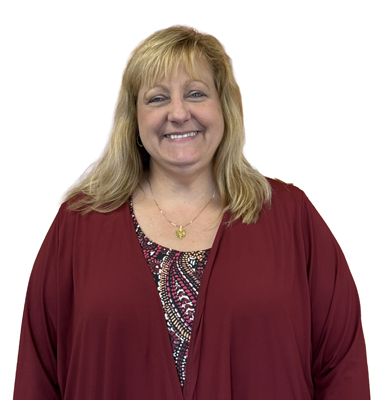
By Kristine Schmidt, Claims Manager
Most vehicle owners have a story to share on a frustrating claims experience after their vehicle was involved in an accident. The same holds true for many lumber and building material business owners, whose drivers become involved in a vehicular accident where they were not at fault. Often, business owners may not realize that in vehicle claims where their driver was not at fault, they have a choice in how the claim is handled: They can either contact the at-fault insurance carrier on their own or let PLM drive the process.
In cases involving vehicle claims, if the business owners have collision and comprehensive coverage, PLM can handle the claim and then file a subrogation claim against that at-fault carrier on their behalf. Subrogation is the process where the innocent party’s insurance carrier handles the damages to their policyholder’s property damage and then pursues the at-fault party and their carrier for reimbursement of our insured’s deductible and what we have paid for the loss.
One advantage to allowing PLM to handle the claim is that no matter the liability decision or investigation time needed, PLM can immediately assist in getting the business’ vehicle or property repaired. We can work with the service provider of the policyholder’s choice. In the vehicle accident scenario, no matter the liability decision, PLM would pay for 100% of the vehicle’s repairs or value, less the deductible.
There may be situations where the at-fault carrier may advise that they cannot make payment and accept liability immediately after the accident possibly due to an on-going investigation, a policy limits issue or something else. Also, PLM cannot assist with reimbursement for out-of-pocket expenses such as loss of business or the use of a rental vehicle. PLM would pursue the at-fault carrier for your deductible and advise the at-fault carrier that our policyholder has out of pocket expenses and is seeking reimbursement. Finally, if during the initial subrogation process, the at-fault carrier denies liability, the claim may go to arbitration where the claim is reviewed by an impartial third party. They review claim files from both sides and make an impartial decision on liability and damages.
To ensure PLM has what we need to successfully pursue a subrogation claim smoothly and successfully, we encourage our policyholders to consider the following best practices in the case of a claim:
- Obtain and save the police report or the police case number, including the name of the police department, the case/report number and the officer’s name.
- Save and share any dash cam video – this can be a game changer in determining liability.
- Take numerous photos of the damaged vehicle or property. Even if you have no damage, photos can assist in determining liability in an accident.
- Collect and share information on the at-fault party: take photos of all involved parties driver’s licenses, vehicle insurance cards, registration cards and vehicle license plates.
- Record and share a detailed statement from your insured/employee driver.
- If there are witnesses, gather and share the witness’ name and contact information.
Each claim is different in how quickly PLM is able to recover from the at-fault carrier. It can be anywhere from a month to several years in our ability to recover, but by following these best practices, your company’s claim is in a better position to move through the process more seamlessly. Talk to our subrogation team to learn more about the subrogation process.
Lumber Memo: Issue 3 – 2026
IN THIS ISSUE:
- President’s Commentary
- Building a Safety Culture That Reaches Every Generation
- Strengthening Loss Prevention in LBM Businesses to Avoid Costly Litigation
- What to Expect After Reporting a Motor Vehicle Accident Claim
- In It Together: How PLM Representatives Provide Relationship Value
- Turning Telematics Data into Safer Driving
- The Benefits of Filing a Claim via Subrogation
- Spotlight On PLM: Claims Leadership Changes, HBSDealer’s Top Women of 2026, and More